 +56°F
+56°F


Hand-counted audit of Senate runoff election draws scrutiny ahead of Tarrant County primaries
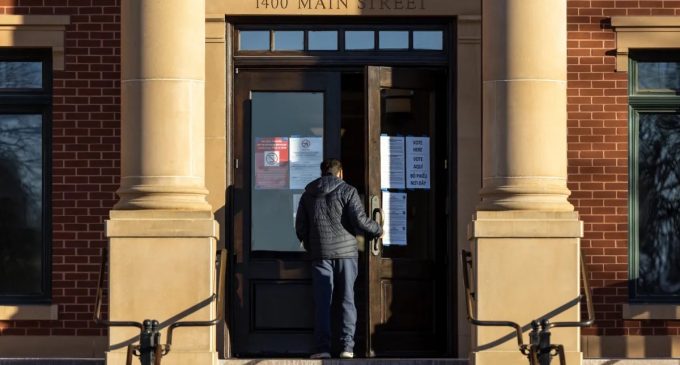
About 95,000 ballots cast in the nationally watched Texas Senate District 9 runoff election were verified with a hand-counted audit by bipartisan volunteers and the Tarrant County Elections Office.
No errors were found during the audit except those caused by workers during the manual counting, participants said. The review came as local Republicans table their recent push to hand-count ballots in future elections.
County elections administrator Clint Ludwig requested that all ballots cast in person during the Jan. 31 runoff — instead of the fraction mandated by state law — be hand-counted to verify the election’s integrity, according to a letter he wrote to the Texas Secretary of State dated Feb. 5.

The Senate District 9 election drew national attention as Democrat Taylor Rehmet pulled off an upset victory in the traditionally red north Fort Worth district that supported President Donald Trump’s reelection by more than 17 points in 2024.
“This special election runoff presents a unique opportunity for the elections administrator to publicly demonstrate the reliability of Tarrant County’s voting equipment, as it is practically feasible for a full hand-count audit of each voted ballot due to the modest number of ballots cast and the singular election on the ballot,” Ludwig wrote in the letter, according to a copy reviewed by the Fort Worth Report.
Request to Expand PEHCADownload
Leaders in Tarrant County’s Republican and Democratic parties both applauded the accuracy of the election results after the audit was completed. However, some within the Democratic party, as well as nonpartisan observers, questioned whether the audit was necessary or warranted the expense of paying ballot counters.
The decision to expand the audit sets a “precedent that we shouldn’t have,” said Janet Mattern, president of the nonpartisan League of Women Voters of Tarrant County, a nonprofit devoted to increasing civic engagement and voter education.
“I’m very concerned that this may happen again, and I’m very concerned that they’re not considering the taxpayer dollars, how expensive this is for an activity that they proved was not necessary,” Mattern said. “What other kind of unnecessary work are they doing and causing us to pay more taxes on?”
The expanded audit required at least 50 paid workers from the Democratic and Republican parties to complete, said Kat Cano, a lead Democratic ballot board judge who co-led the audit. Ludwig and county officials did not respond to questions on how much the effort cost.
Elections workers identified no errors from the voting machines but introduced and caught several “human miscounts” during the hand-counting process, Cano explained.
“The machines are very accurate. And when we were trying to prove the accuracy of the machines, the problem you run into is that humans are inaccurate,” Cano said. “So you have to go back and redo your work a lot of the time.”
Amie Super, the lead Republican ballot board judge who led the audit with Cano, did not return requests for comment.
The audit comes about a month after the local GOP abandoned a proposal to hand-count ballots cast in the March primaries, which includes county, state and federal offices. Party officials decided the effort would be too logistically challenging for this year’s primaries but promised to continue exploring the idea for future elections.
Texas law requires counties to audit a small fraction of ballots cast in each election to certify accurate results. The so-called Post-Election Hand Count Audit must start within 72 hours after polls close on Election Day and be completed within 21 days.

Audit results must be posted on the county’s website where election results are shared. As of late afternoon Feb. 19, those results were not available.
For Senate District 9, the standard, post-election audit calls for a hand-count of the ballots cast at three Election Day polling locations, three early voting polling locations and three precincts in which at least one ballot was sent by mail, according to Ludwig’s letter.
Ludwig requested permission from the Secretary of State’s office to conduct the full audit six days after the runoff. Christina Adkins, the state’s elections director, approved the request the same day, according to a copy of her letter to Ludwig reviewed by the Report.
Response to Tarrant County PECHA request – Sent Via EmailDownload
Alicia Pierce, a spokesperson for the Secretary of State’s office, confirmed permission was granted for the audit and that Tarrant County is paying all associated costs but otherwise deferred questions to the county elections office.
Ludwig did not answer questions about who initiated the audit or why. In a text message Thursday, he told the Report his office was working on a press release related to the topic.
Tarrant County commissioners voted unanimously Feb. 10 to canvass the election results. It was during that meeting that Commissioner Alisa Simmons learned about the expanded audit when a speaker thanked County Judge Tim O’Hare for certifying the election’s integrity.
By Feb. 19, Simmons had not received any details or updates about the audit and its findings, she said. She questioned who authorized related costs, as the issue didn’t go to a commissioners court vote.
Like Mattern, Simmons worries the action could set an “expensive” precedent for future elections, particularly ones with packed ballots like November.

“If we’re starting this now, what’s to say we’re not going to do it for future elections?” said Simmons, who is seeking the Democratic nomination in the March 3 primaries to challenge O’Hare for the county judge seat in November.
Leah Nesbitt, a spokesperson for O’Hare’s office, did not return a request for comment.
The January runoff was “a good chance” to demonstrate the integrity of Tarrant County’s voting systems since only two candidates were on the ballot, said Allison Campolo, chair of the Tarrant County Democratic Party. The completed audit did just that, she said, adding that she’s unsure why it was necessary since the state-mandated partial audit didn’t find any errors.
“The only thing the audit can do is cast doubt or give you peace of mind on your process,” Campolo said.
After Rehmet’s win in the Senate District 9 race, it’s important that voters trust local elections, Campolo added. Political observers called the race a “bellwether” for the November general election as local Republicans seek to maintain control of Tarrant County, historically a GOP stronghold that’s showed signs of purple trends in recent elections.
At a political rally the day after the runoff, O’Hare told local and state Republicans, “We cannot afford to lose what is the most important county in the entire country.” He and other GOP officials urged voters to elect conservatives up and down the ballot in November.
Although she was encouraged to see the two political parties work collaboratively to conduct the audit, Mattern said she’s wary of foul play because she didn’t see the audit disclosed to residents publicly. She wants to know why the audit was necessary and how much it cost taxpayers.
“Everything may be correct, but if you do not have the transparency of what’s happening, it leads to people thinking that something wrong is going on — whether it is or not,” Mattern said.
Leigh Wambsganss — the Trump-endorsed, “ultra MAGA” Southlake Republican who lost to Rehmet — said she doesn’t know who requested the audit.
“I appreciate the work done by the county and the elections administrator in carrying out this important duty,” Wambsganss wrote in a text message. “Neither I, nor anyone from my campaign team, asked for a hand count.”
Tim Davis, chair of the Tarrant County Republican Party, said he doesn’t know why the expanded audit was called, but he believes “it’s definitely something that’s good to do.”
“We should audit every election that we have the capability and the resources to audit because elections are so important,” he added.

Campolo disagreed, saying fully auditing future elections by hand would be “a wild use of time,” particularly after this audit demonstrated no errors from the voting machines.
Meanwhile, Rehmet swore his oath of office at the state’s capitol Thursday afternoon. He did not return a request for comment.
“To the working families of Texas: your struggles, hopes, and hard work will be heard at the Capitol,” Rehmet wrote in a Feb. 19 social media post about his swearing in. “Together, we will fight to make sure our government works for the people — not the wealthy and well-connected.”
Cecilia Lenzen is a government accountability reporter for the Fort Worth Report. Contact her at cecilia.lenzen@fortworthreport.org.
At the Fort Worth Report, news decisions are made independently of our board members and financial supporters. Read more about our editorial independence policy here.

This article first appeared on Fort Worth Report and is republished here under a Creative Commons Attribution-NoDerivatives 4.0 International License.
Discover more from Mineral Wells Area News
Subscribe to get the latest posts sent to your email.






There are no comments at the moment, do you want to add one?
Write a comment