 +53°F
+53°F


Mineral Wells Weighs Historic Preservation Ordinance
Reporting By Gary Norman | Mineral Wells Area News
MINERAL WELLS, Texas — Mineral Wells is moving toward the creation of a local historic preservation program that could eventually regulate exterior changes to designated historic properties and make the city eligible for preservation grants.

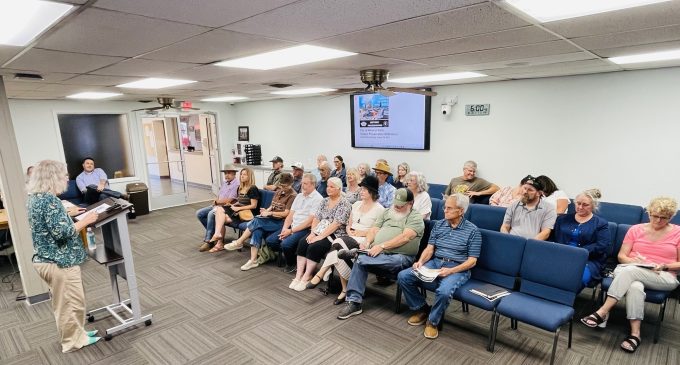
Steph McDougal, a historic preservation consultant and architectural historian with Stantec Consulting Services, outlined a proposed historic preservation ordinance during an Aug. 10 public meeting organized by the Downtown Mineral Wells office.
McDougal emphasized that adoption of the ordinance would not immediately designate any property as a local landmark or historic district.
“This just provides the ability to do it, creates the process for doing it, doesn’t designate anything,” McDougal said.
The ordinance would serve as an “enabling ordinance,” establishing a process for property owners to apply for historic designation and giving the city authority to establish local historic landmarks and historic districts in the future. Any specific designation would require separate action by city officials and public review.
Mineral Wells currently has the Mineral Wells Central Historic District, which was listed in the National Register of Historic Places in 2020, along with several individually listed properties and three Recorded Texas Historic Landmarks. The national designation is largely honorary and does not, by itself, regulate property owners, McDougal said.
Local historic overlay zoning would be different.
If a property were designated as a local landmark or placed within a local historic district, owners generally would need a certificate of appropriateness before making certain exterior changes, demolishing or relocating a structure, constructing an addition or building a new structure on the property.
Interior work would not be subject to the proposed historic preservation regulations, McDougal said. Ordinary maintenance and repairs also could be exempt, depending on the final ordinance.
Applications would be reviewed using the Secretary of the Interior’s Standards for the Treatment of Historic Properties. Minor projects could be eligible for administrative review by city staff, while other applications would go before a future Landmark Commission. Decisions could be appealed to the City Council.
McDougal said the city also must decide how the ordinance should address demolition by neglect, economic hardship and the demolition of historic structures without a permit.
The draft ordinance is being developed to meet requirements for the Certified Local Government program, administered through the National Park Service and Texas Historical Commission. Participation could make Mineral Wells eligible for preservation grants.
What Happens if an Owner Doesn’t Want to Be Included?
Questions from residents during the meeting focused heavily on how a future local historic district could affect individual property owners.
Attendees asked what would happen if a property owner did not want to be included in a future historic district.
McDougal said owners would have multiple opportunities to comment during the designation process, including at public meetings before the Landmark Commission, Planning and Zoning Commission and City Council. However, inclusion would not be an individual opt-in or opt-out decision if a property ultimately fell within district boundaries approved by the city.
Another resident asked whether historic designation could prevent an owner from adding another floor or constructing a new building.
McDougal said additions and new construction could be permitted if they were compatible with the historic property or district and approved through the certificate-of-appropriateness process. Historic designation would not place an area in a museum or prohibit all change, she said.
Residents also asked about mobile homes, small commercial buildings and other development within areas that could eventually become part of a historic district.
McDougal said historic overlay zoning would not determine whether a property could contain a mobile home or a particular type of business. Those issues would continue to be governed by the city’s underlying zoning regulations.
The regular building-permit process also would remain in place for properties within a local historic district. However, McDougal said a building permit could be placed on hold until the property owner received a certificate of appropriateness for exterior work covered by the preservation ordinance.
Potential Economic Benefits
Supporters of historic preservation said a local district could help protect the visual character of downtown Mineral Wells, attract heritage tourism and encourage investment.
McDougal cited research indicating property values in local historic districts tend to be higher and more stable than those of comparable properties outside historic districts.
She said the potential economic benefits could extend beyond people who own property downtown. Preserving the historic downtown could attract heritage tourists, who research shows tend to stay longer and spend more money. Rehabilitation projects also generally rely heavily on local labor, allowing more of the money invested in projects to remain within the local economy, she said.
City Seeking Public Input
The city is seeking public input on six areas of the proposed ordinance: qualifications for Landmark Commission members, additional criteria for local historic designations, how property owners should be counted when initiating a district proposal, exemptions from review, projects eligible for administrative approval and penalties for unauthorized demolition.
Residents were asked to review the draft ordinance and submit comments through an online survey or by email to Kristen Jaworski, the city’s Main Street manager. Officials requested that comments and questions be submitted in writing by the end of August.
The revised ordinance is expected to be presented to the Mineral Wells City Council for consideration Sept. 15, according to discussion at the meeting.
No additional community meeting was announced, although residents will have an opportunity to attend and speak when the proposal goes before the City Council.
Discover more from Mineral Wells Area News
Subscribe to get the latest posts sent to your email.





There are no comments at the moment, do you want to add one?
Write a comment